
In many Kerala homes, the day ends the same way.
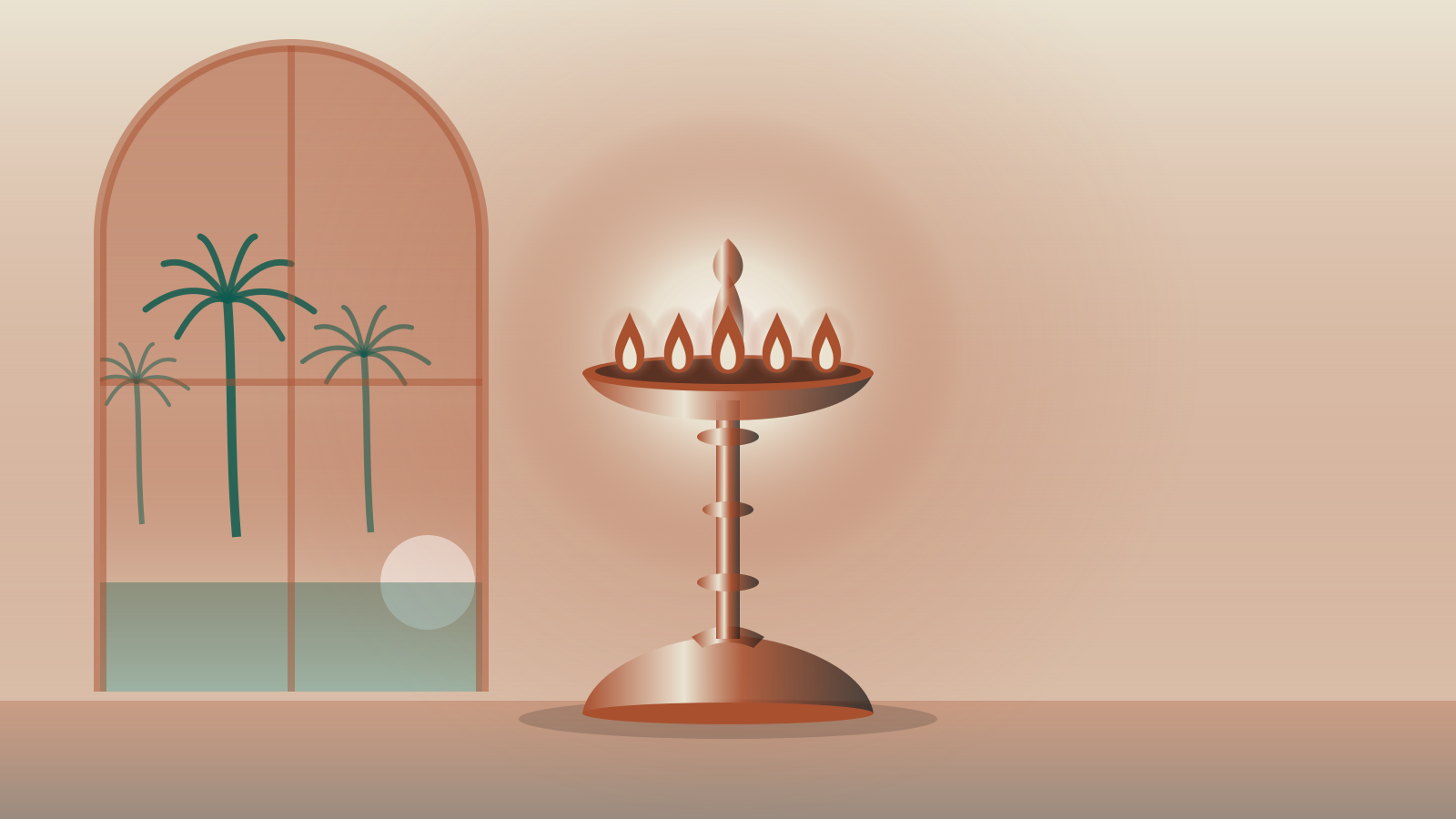
As the light softens over the coconut palms, someone wipes the brass nilavilakku clean, pours in the oil, twists the cotton wicks and lights the lamp. The flame catches and steadies, and the house seems to pause. Hands and feet are washed. Voices drop a little. Dusk, in Kerala, is not just a time of day. It is a ritual.
Most of us grew up with this without a second thought. It was simply what happened when the sun went down. Yet that small flame holds something larger: a way of living in rhythm, passed quietly from one generation to the next.
Medicine that doesn't look like medicine
The evening lamp is only one of these rhythms. Kerala homes are full of others.
There is the pot of jeerakavellam, water boiled with cumin, warming on the stove and drunk through the day. There is oil on the head before a bath. There is kanji, plain rice gruel, when someone is unwell. There are leaves crushed into a paste for small cuts, early dinners, and the instinct to rest when the body is tired.
These habits rarely come with explanations. They come with confidence: this is simply how it is done.
Yet almost every one of them has a name and a place in a system that is thousands of years old. The daily routine is called Dinacharya. Oiling the body is abhyanga. The idea that food should be lighter when the body is struggling, that routines should change with the seasons, and that sleep, food and rhythm come before any medicine: all of this is written down and refined in texts older than most of the world's universities.
Few families have read those texts. They didn't need to. The knowledge had already become habit.
Ayurveda begins at home
This is the side of Ayurveda the wider world often misses. Say the word abroad and people picture a spa, a massage table or a bottle on a pharmacy shelf. In Kerala, Ayurveda begins long before anyone visits a clinic. It begins in the kitchen, at the bathing step, in when we sleep and wake, and in the lamp lit at dusk.
It is a way of paying attention to the body: what it needs, when it needs it, and what it is saying when something is wrong. And when home habits are not enough, when a fever lingers or a pain will not leave, Kerala families have always known the next step: the Vaidya, a trained physician trusted almost like family.
That partnership is what made Kerala's Ayurveda so resilient. Everyday wisdom lived in every home. Expert knowledge lived with qualified physicians. And the two trusted each other.
What happens when we move away
Today, millions of Malayalis live far from where they grew up: in Bengaluru and Mumbai, in Dubai, Doha and Muscat, in London and Toronto. Many say the same thing. The rhythm of home has faded. And when they want genuine Ayurvedic advice, they have no idea where to find a Vaidya they can trust.
What fills the gap is rarely the real thing. It is a luxury retreat, or a forwarded message promising a miracle cure. The knowledge of qualified Vaidyas still lives in Kerala. It just isn't easy to reach.
That gap is why Ekashastra exists.
One science
Eka means one. Shastra means science, or a body of knowledge. Ekashastra: one science.
The name is a reminder that Ayurveda is not a collection of home remedies or a wellness trend. It is a single, coherent science, and Kerala is one of the places that kept it most alive. Ekashastra does not set out to reinvent it. The aim is to connect people, wherever they live, with the qualified Vaidyas who practise it, and to make that connection as simple and trustworthy as calling the family Vaidya once was.
When it came to choosing a symbol, there was only ever one choice. A lamp.
Coming next
These habits passed from parent to child for generations. But where did they begin? Who first wrote that the body has a daily rhythm, that food is medicine, that health is balance?
The next post goes back more than two thousand years to find out.
Next in The Ekashastra Journal: Ayurveda Before Kerala: A 2,000-Year-Old Science.
The traditional practices described here are shared for cultural and educational interest. They are not medical advice. For any health concern, please consult a qualified Vaidya or doctor.